Thinking about adding a dock or boat lift on Spring Lake, or buying a home that already has one? You are smart to pause before you act. Local rules, environmental protections, and seasonal conditions in Ottawa County can affect what you can build, how you maintain it, and even how a sale proceeds. In this guide, you will learn the essentials to plan confidently, avoid costly missteps, and protect your investment. Let’s dive in.
Start with local rules
Before you design or install anything, identify which jurisdiction your property falls under. Spring Lake shoreline parcels can be in the Village of Spring Lake, Spring Lake Township, or under Ottawa County review. Each may have its own setback, length, and mooring limits.
- Contact your municipal building and zoning office to confirm local ordinances.
- Ask about required permits, inspections, and spacing rules near side lot lines.
- Document any existing approvals to share with future buyers.
Permits and approvals
Dock and lift projects often require more than one approval. The exact mix depends on your site and scope. Starting early prevents delays and fines.
- Municipal permits: Local building or zoning permits may apply based on setbacks, dock length, and the number of moored boats.
- State review: The Michigan Department of Environment, Great Lakes, and Energy (EGLE) may require a permit if your project affects wetlands, aquatic vegetation, or water flow.
- Federal review: The U.S. Army Corps of Engineers may be involved for structures in federally regulated waters.
Typical steps:
- Confirm local jurisdiction and rules with your village, township, and Ottawa County.
- Ask whether EGLE or the U.S. Army Corps must review your plan.
- Prepare a site plan with dimensions, materials, and placement.
- Obtain approvals and understand any mitigation conditions.
- Schedule inspections if required.
Installing unpermitted structures can lead to removal orders, fines, or closing delays when you sell. Keep copies of permits and correspondence.
Riparian rights basics
If you own shoreline property, you generally have rights to access and use the water adjoining your parcel. Those rights can be limited by state ownership of submerged lands, local ordinances, and permits. In some cases, a submerged‑land lease or additional approvals may be needed. Always verify what applies to your address with local officials and EGLE before you commit to a design.
Site conditions on Spring Lake
Spring Lake is an inland lake that sees water‑level changes, wind chop, and winter ice. Your design should match local conditions.
- Ice and freeze‑thaw: Plan for lifting, removal, or securing equipment before winter.
- Exposure: Consider prevailing winds and boat traffic when choosing dock length and anchoring.
- Neighbors and navigation: Respect spacing from side lot lines and keep clear navigation lanes.
- Sensitive areas: Nearshore vegetation and wetlands support habitat and often trigger added review.
Dock types and tradeoffs
Choosing the right dock starts with how you plan to use it and how your shoreline behaves. Each type has pros and cons for Spring Lake.
Seasonal floating docks
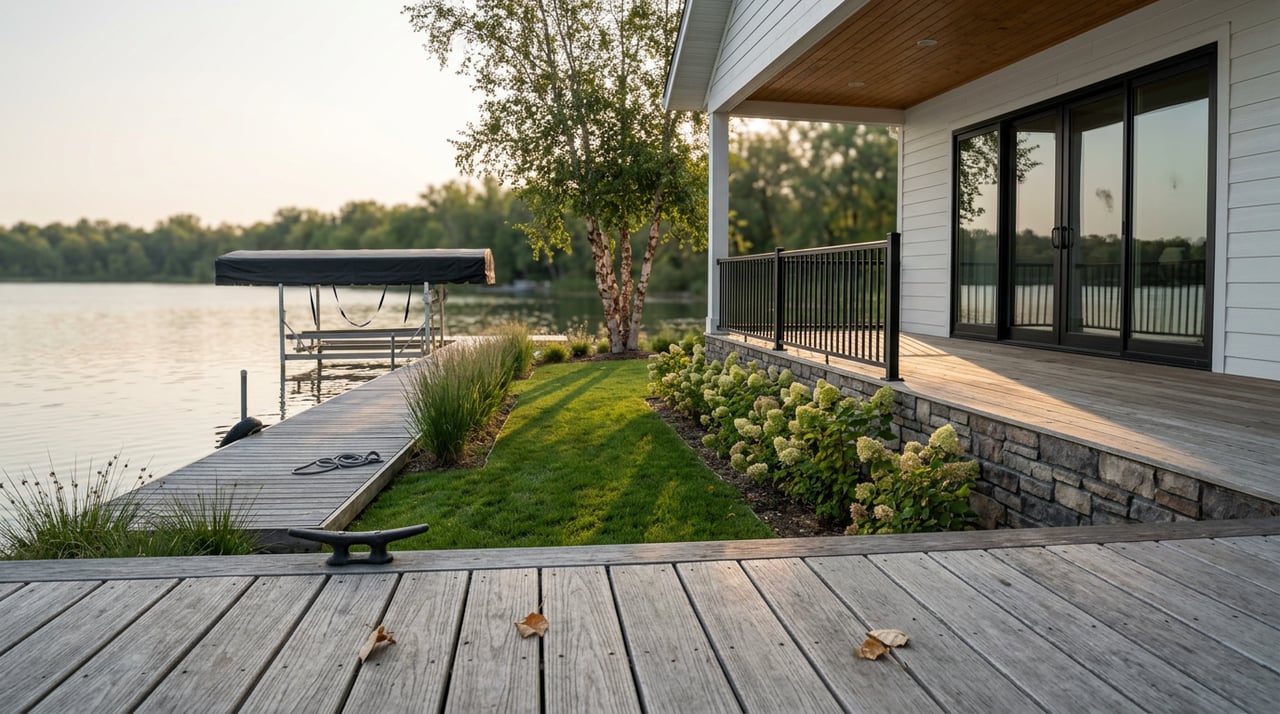
These modular docks float on pontoons and are typically removed or secured for winter.
- Pros: Flexible layout, relatively lower cost, easy seasonal adjustment.
- Cons: More movement in rough water, flotation can be damaged if left in during ice.
Permanent pile or fixed piers
These use driven piles with a fixed deck above the water.
- Pros: Very stable in waves, reliable access.
- Cons: Higher cost, often requires heavy equipment and more permitting.
Decking and walkways
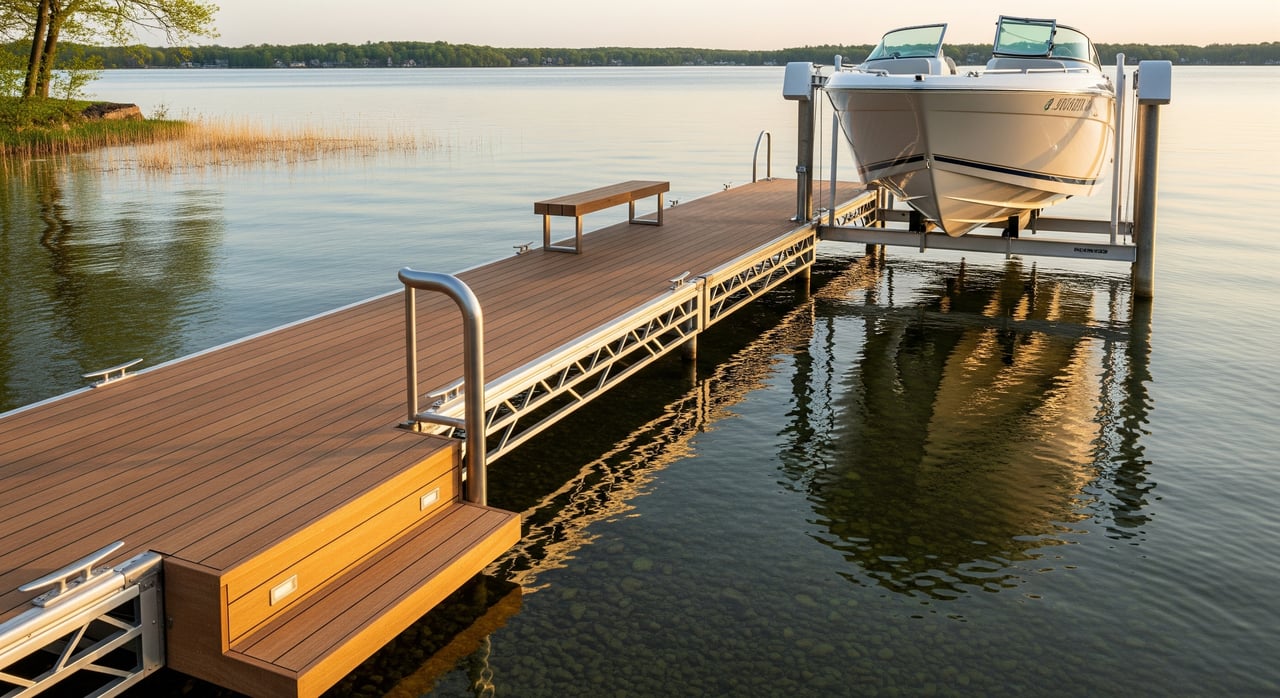
Aluminum framing is popular for its corrosion resistance and low upkeep in freshwater. Pressure‑treated wood is traditional, while composite decking reduces maintenance and resists rot. Your contractor can help you balance upfront cost with long‑term care.
Boat lift options
Protecting your watercraft from fouling and storms is a common goal on Spring Lake. Match the lift to your boat and shoreline depth.
- In‑water floating lifts: Easier to install, but vulnerable if left in during ice.
- Hydraulic or vertical lifts: Raise boats clear of the water for better protection with more mechanical complexity and cost.
- PWC lifts and single‑boat lifts: Smaller footprint that must match weight and hull shape.
- Dry storage alternatives: Onshore racks or marina storage can reduce shoreline congestion and seasonal handling.
Seasonal setup and winter practices
Michigan winters are hard on docks and lifts. Plan a routine that protects your equipment and the lake.
- Fall removal or lift‑raising: Many owners remove seasonal docks and raise lifts to avoid ice damage.
- Adjustable ramps: Use adjustable components to handle seasonal water‑level changes.
- Storm prep: Secure mooring lines and consider breakaway features to reduce damage in heavy wind.
Environmental and invasive species care
Responsible shoreline ownership protects Spring Lake’s water quality and habitat.
- Vegetation and habitat: Avoid shading or disturbing shallow vegetated areas that support fish spawning and birds.
- Aquatic invasive species: Follow clean, drain, and dry practices for boats, docks, lifts, and equipment to prevent the spread of zebra mussels and Eurasian watermilfoil.
- Erosion control: Hard structures can alter wave patterns. Vegetative buffers often help stabilize shorelines and reduce runoff.
Permitting often requires proof that your project minimizes environmental impacts and avoids wetlands or sensitive habitat. Build this into your plan from the start.
Maintenance and safety basics
Annual inspections and smart upgrades extend the life of your dock and lift.
- Inspect: Check floats, fasteners, piles, cables, straps, decking, and hardware every season and after storms.
- Winterize: Follow manufacturer and contractor guidance for removal, lubrication, electrical safety, and storage.
- Safety upgrades: Consider slip‑resistant surfaces, handrails, and clear end‑of‑dock markers. Add lighting if you moor boats at night and follow local navigation rules.
Insurance and budgeting
Insurance coverage varies. Some homeowner policies cover dock or lift damage, while others exclude certain perils. Watercraft liability and separate marine coverage may be appropriate. Document improvements and permits, then confirm coverage in writing with your insurer.
Costs depend on design, materials, lift type, site access, contractor labor, and seasonal services like winter removal and storage. Get multiple written bids from licensed marine contractors, and include permit and inspection fees in your budget.
Real estate implications for buyers and sellers
Well‑built, permitted docks and lifts can boost buyer confidence and add value to Spring Lake properties. Unpermitted or poorly maintained structures can trigger delays, price renegotiations, or removal demands.
- Sellers: Gather permits, maintenance logs, warranties, and any leases or easements. A clear file reduces surprises during due diligence.
- Buyers: Verify that mooring rights and any approvals transfer with the property. Have a marine contractor inspect the structure for safety and remaining useful life.
Spring Lake buyer and seller checklist
Use this quick list to move forward with clarity.
- Confirm your jurisdiction: Village of Spring Lake or Spring Lake Township, plus Ottawa County.
- Request documents: Ask the seller for permits, inspection reports, maintenance records, and any submerged‑land leases or easements.
- Hire a pro: Have a licensed marine contractor evaluate condition, expected lifespan, and repair costs.
- Verify approvals: Check whether state or federal permits apply and if they are transferable.
- Review HOA rules: Confirm any association limits on spacing, colors, or lift types.
- Confirm insurance: Ask your insurer about coverage for dock and lift damage and liability, then get it in writing.
Questions to ask marine contractors
- What dock and lift types fit my shoreline exposure, water depth, and ice conditions?
- What permitting is likely for my plan, and how long does it typically take?
- What materials balance durability and maintenance for this site?
- What is the plan and cost for seasonal removal and spring reinstallation?
- What maintenance will I need each year, and what is the expected lifespan of each component?
Seller prep tips
If you plan to sell, tidy up your dock and lift file now.
- Compile permits, drawings, contractor invoices, and maintenance logs.
- Note any known violations and steps taken to correct them.
- Provide manufacturer manuals and warranty details to buyers.
Buyer due diligence tips
Protect your purchase by verifying facts and future costs.
- Confirm the location and dimensions of the dock and lift match approvals.
- Ask for proof of compliance with municipal, state, and federal requirements as applicable.
- Get at least two contractor opinions on condition and needed updates.
A thoughtful approach keeps you compliant, protects Spring Lake’s shoreline, and supports your property value. When you are ready to evaluate options or prepare for a sale, connect with a local team that understands waterfront nuances and how to present them to buyers.
Looking for personalized guidance on Spring Lake waterfront? Reach out to the team at Rodriguez Homes for local insight, buyer and seller strategies, and a clear next step.
FAQs
Do I need a permit for a dock or lift on Spring Lake?
- In many cases, yes; confirm local municipal rules first, then check with state and federal agencies if your project affects wetlands, vegetation, or navigable waters.
Who owns the lakebed near my property?
- Submerged lands may be held by the state; whether you need a lease depends on your location and design, so verify with local officials and state regulators.
Can I leave my dock or lift in over winter on Spring Lake?
- Many owners remove or raise seasonal equipment to prevent ice damage; follow manufacturer guidance and local contractor practices for your setup.
What environmental rules apply to Spring Lake docks and lifts?
- Projects that disturb shorelines, wetlands, or aquatic vegetation often require review and mitigation; also follow clean, drain, dry practices to reduce invasive species.
How much does a dock and lift cost on Spring Lake?
- Costs vary by size, materials, lift type, access, and seasonal services; get multiple written bids that include permitting, inspections, and winter handling.
What documents should sellers provide to buyers?
- Share permits, site plans, maintenance records, contractor invoices, warranties, and any leases or easements, plus notes on compliance or corrections.